


What Is Pipe Descaling and When Is It Used for Drain Problems?
Home /

A drain can be open and still have a serious flow problem.
When mineral scale, rust, or hardened deposits build up inside a drainpipe, the usable opening can become progressively smaller. Water may still pass through, but more slowly. Debris can also catch on the rough interior surface, turning a marginal restriction into a recurring blockage.
That is where pipe descaling can make sense.
Straight Shooter Plumbing & Rooter’s drain cleaning in Dalton Gardens, ID, often starts with a basic question: are we dealing with a removable blockage, or has the inside of the pipe itself become restricted by years of buildup? The answer affects whether conventional cleaning, descaling, hydro jetting, repair, or another approach is appropriate.
Before recommending a more involved service, we want to know what is actually inside the pipe.
What Is Pipe Descaling?
Pipe descaling is the process of removing hardened deposits from the interior of a pipe.
In drain systems, those deposits can include mineral scale, corrosion products, and other hardened material that has accumulated on the pipe wall. The buildup reduces the effective inside diameter and creates a rougher surface.
The result can be a drain that repeatedly slows down even after ordinary blockage removal.
Descaling is different from simply pushing a blockage farther down the line. The objective is to remove material attached to the pipe itself.
The exact equipment and technique depend on the pipe material, condition, diameter, accessibility, and type of buildup.
Why Does Scale Build Up Inside Drainpipes?
Scale develops when minerals and other deposits accumulate on the interior surface of plumbing over time.
The chemistry of the water, pipe material, age of the system, flow conditions, and previous plumbing history can all contribute.
In some homes, the problem may be more pronounced in older metal drainage systems. Corrosion can create an irregular interior surface that catches additional material. Mineral deposits can then compound the restriction.
A pipe does not need to be completely blocked for scale to cause trouble.
Even a partial reduction in the internal opening can affect drainage, particularly when grease, hair, soap residue, sediment, or other debris encounters the roughened surface.
How Can We Tell if Scale Is the Problem?
Symptoms provide clues, but they do not prove that scaling is responsible.
A slow drain can have many causes. A clogged drain may be caused by accumulated debris near the fixture, a deeper obstruction, a damaged pipe, roots, or substantial buildup along the pipe wall.
We look for patterns.
If a drain repeatedly slows after conventional cleaning, the interior condition of the pipe deserves more attention. If multiple fixtures connected to the same branch experience drainage problems, we investigate farther into the system.
Descaling Is Not the Same as Drain Snaking
A cable can be effective for clearing many types of obstructions.
Drain snaking generally uses a rotating cable to break through or retrieve material obstructing the pipe. It can restore flow without necessarily removing extensive deposits attached to the pipe wall.
That difference becomes important when the same drain keeps developing problems.
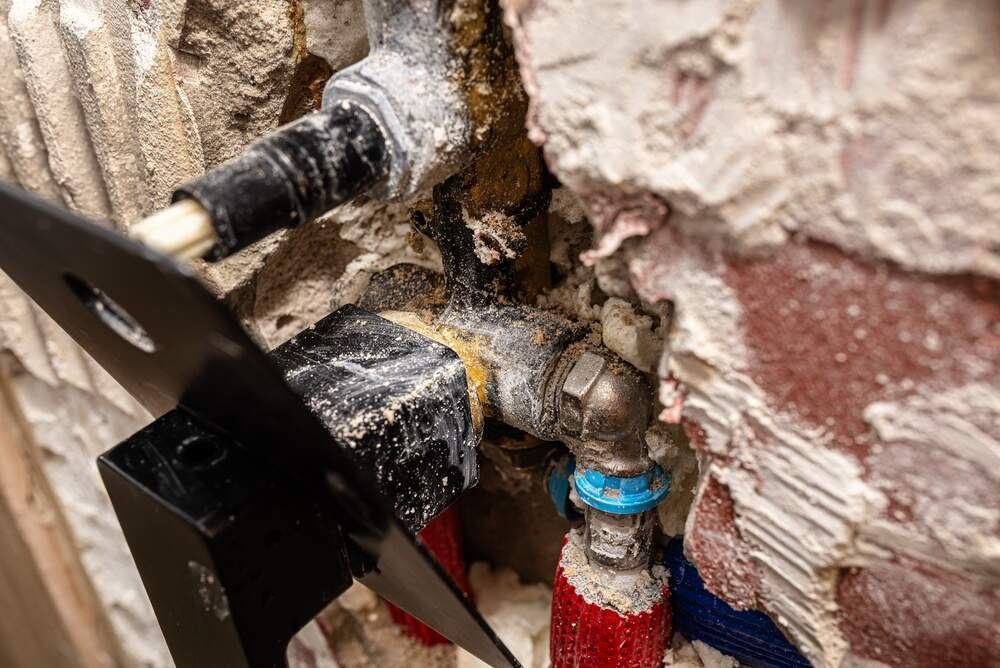
If a cable opens a passage through a heavily scaled pipe, water may flow again while substantial buildup remains along the interior. The immediate blockage is gone, but the pipe may still have a restricted and rough internal surface.
Descaling addresses the buildup itself when the pipe is a suitable candidate.
When Descaling Makes Commercial Sense
Descaling is most useful when the pipe has significant interior buildup that can be removed without replacing the line.
For a homeowner, the practical question is not whether descaling exists. It is whether the condition of the existing pipe makes descaling a worthwhile repair.
We consider:
- The amount and type of buildup
- Pipe material
- Pipe diameter
- Structural condition
- Frequency of previous blockages
- Accessibility
- Length of affected pipe
- Whether the pipe has cracks or other defects
- Whether the buildup is localized or widespread
- Whether the pipe can withstand the selected cleaning method
A pipe with substantial scale but good structural integrity may be a reasonable candidate.
A severely deteriorated pipe may not be.
Removing deposits from a structurally compromised pipe does not restore missing material or repair cracks.
Old Metal Drainpipes Require More Care
Older metal drainage systems can present a more complicated decision.
Corrosion may have reduced the pipe wall over time. At the same time, corrosion products and mineral deposits may have accumulated inside the pipe.
That creates an important diagnostic problem.
Removing the buildup can improve the internal opening, but aggressive cleaning against severely deteriorated pipe can create complications. We therefore want to understand the condition of the underlying pipe before choosing the cleaning method.
A homeowner should be cautious about approving a descaling service based only on the statement that a pipe is “full of scale.”
The more important question is what condition the pipe will be in after the deposits are removed.
What Is the Difference Between Descaling and Hydro Jetting?
Descaling and hydro jetting can overlap in purpose, but they are not interchangeable terms. Hydro jetting uses pressurized water to clean the interior of suitable plumbing.
It can be effective for removing grease, sludge, organic material, and certain deposits. The equipment and pressure need to be appropriate for the plumbing being cleaned.
The condition of the pipe determines what cleaning method is appropriate. A heavily scaled line may require equipment or a process specifically suited to hardened deposits. Another line may respond well to high-pressure water cleaning.
When a Rooter Service Is More Appropriate
Roots create a different type of drain problem.
Tree and plant roots can enter sewer and drain lines through cracks, joints, or other openings. Once inside, they can collect waste and create recurring restrictions.
A rooter service may be appropriate when roots are the primary obstruction.
Descaling would not address the underlying root intrusion. Removing mineral buildup from a pipe with active root penetration does not repair the opening that allowed the roots inside.
This is another reason diagnosis should come before equipment selection.
Dalton Gardens has mature residential landscapes and established trees in many neighborhoods. Their presence does not mean every recurring drain problem is caused by roots, but root intrusion becomes one of the possibilities when the symptoms and inspection findings support it.
What Happens if You Keep Cleaning a Scaled Pipe?
Repeated cleaning can become expensive if the underlying condition is never addressed.
Suppose a drain is slow because the pipe has a substantial buildup along its interior. A conventional cleaning restores flow temporarily, but the narrowed interior remains.
The same symptom may return.
At that point, homeowners may pay for multiple cleaning visits without improving the condition of the pipe itself.
Descaling may be worth considering when inspection shows that removable deposits are the recurring cause and the pipe remains structurally suitable for cleaning.
The alternative could be continued maintenance, repair, or replacement, depending on what the inspection reveals.
When Descaling Is Not the Right Answer
Not every restricted pipe should be descaled.
Replacement may make more sense when the pipe has severe structural deterioration, extensive cracking, major deformation, or another defect that cleaning cannot correct.
Repair may be appropriate when the problem is confined to a damaged section.
A localized obstruction may require ordinary cleaning rather than a full descaling process.
Roots may require root removal and evaluation of the affected line.
Grease buildup may respond better to a cleaning method designed for that material.
The commercial decision comes down to the condition of the pipe and the actual cause of the drainage problem.
Why Camera Inspection Can Change the Recommendation
Looking inside the pipe can prevent unnecessary work.
Our $89 drain cleaning includes a free camera inspection, giving us an opportunity to examine the condition of the line where the service applies. A camera can reveal restrictions, buildup, roots, cracks, offsets, and other conditions that may not be obvious from the fixture.
The findings can change the recommended scope.
If the pipe is structurally sound but heavily scaled, descaling may be worth discussing. If the camera shows a collapsed or severely damaged section, cleaning the interior will not solve the structural problem.
The camera does not replace professional judgment. It provides another piece of evidence.
Does Descaling Mean the Pipe Is Good as New?
No.
Descaling removes deposits. It does not manufacture new pipe material or reverse structural deterioration.
A cleaned pipe can still have corrosion, weakened sections, poor joints, cracks, or other defects.
We explain the difference because homeowners sometimes assume that removing scale restores an older drainpipe to its original condition.
It does not.
The value comes from improving the usable interior of a pipe that is still suitable for continued service.
What Should You Ask Before Approving Descaling?
If a contractor recommends descaling, ask what the buildup is and how it was identified.
Then ask about the pipe material and condition.
You should also know whether the recommended process is intended to remove mineral scale, corrosion buildup, grease, roots, or another material. Those problems are not identical, and the appropriate cleaning method can differ.
A useful discussion should also cover whether the pipe has structural damage and whether cleaning is expected to solve the recurring symptom.
You are not simply buying a cleaning method. You are deciding whether the existing pipe is worth restoring.
Our Approach to Recurring Drain Problems
We treat recurring drainage issues as a diagnostic problem rather than assuming every slow drain needs the same service.
Our family-operated full-service plumbing company works with residential, commercial, and industrial plumbing systems. Our licensed, bonded, and insured plumbers have more than 30 years of combined plumbing experience.
We provide free estimates and a full workmanship guarantee. We also offer 24/7 emergency service when a drainage problem becomes an urgent plumbing issue.
When appropriate, we use inspection findings to determine whether cleaning, descaling, hydro jetting, repair, or another solution makes sense for the actual pipe.
Frequently Asked Questions
Can every type of drainpipe be descaled?
No. Pipe material, structural condition, diameter, accessibility, and the type of buildup all affect whether descaling is appropriate.
Can descaling damage old pipes?
It can create risks when severely deteriorated plumbing is subjected to aggressive cleaning. The condition of the pipe should be evaluated before selecting the method and intensity of cleaning.
Is hydro jetting better than descaling?
Neither method is automatically better. The appropriate approach depends on what is restricting the pipe and whether the existing plumbing can safely handle the cleaning method.
Will descaling prevent future clogs?
It can reduce restrictions caused by interior buildup when the pipe is otherwise suitable for continued use, but it cannot prevent unrelated problems such as new debris, root intrusion, or structural pipe failures.
Clean the Pipe or Replace It? Don’t Guess
When a drain keeps slowing down, the cheapest decision is not always another round of basic cleaning. If the pipe has substantial buildup but remains structurally sound, removing that buildup may extend the useful performance of the existing line without immediately moving to replacement.
For customers who need drain cleaning in Dalton Gardens, ID, Straight Shooter Plumbing & Rooter can evaluate the symptoms.
Contact us to find out whether your recurring drain problem calls for conventional cleaning, descaling, hydro jetting, repair, or a different solution. The right answer starts with finding out what is actually restricting the pipe.
Contact Straight Shooter Plumbing and Rooter Now!
Straight Shooter Plumbing and Rooter is your leading plumber in Idaho, Texas, and Tennessee. Call us or fill out the form to schedule an appointment.