


Reading a Home Water Quality Test: What Matters and What Doesn’t
Home /

A water test can tell you what is in your water. It cannot, however, automatically tell you which treatment system you need.
That distinction is where many homeowners go wrong. They see a high number for hardness, iron, bacteria, pH, or another parameter and immediately start comparing filtration equipment. The better approach is to read the results first and then match treatment to the specific problem.
Our water treatment services in Athol, ID, start with understanding the test rather than selling equipment based on one number.
Start With the Actual Test Results
A useful water test may measure several different characteristics. They do not all mean the same thing, and they do not all call for treatment.
Common results include:
- pH
- Hardness
- Iron
- Manganese
- Total dissolved solids
- Turbidity
- Nitrate
- Nitrite
- Chlorine, where applicable
- Bacteria
- Lead and other metals
- Other contaminants based on the test
The first step is identifying exactly what was tested. Before choosing equipment, we look at the complete result and the testing method behind it.
Hardness Is Not the Same as Contamination
Hard water is one of the most misunderstood water-quality issues.
Hardness generally comes from dissolved calcium and magnesium. These minerals can contribute to scale on plumbing fixtures, water heaters, faucets, showerheads, and other surfaces.
That does not mean hard water is automatically unsafe to drink.
The practical concern is often how mineral content affects plumbing and household use. In an Athol home, scale can become particularly noticeable around fixtures and water-heating equipment where mineral deposits accumulate over time.
A water softener is designed to address hardness. It is not a universal treatment device for every water-quality problem.
pH Needs Context
pH measures how acidic or alkaline water is on a scale.
A result outside the range appropriate for the intended use can have implications for plumbing, taste, corrosion, or scaling. But the pH number should not be viewed in isolation.
The type of plumbing in the home matters. So does the presence of other dissolved substances.
For example, water chemistry that contributes to corrosion can affect metal plumbing over time. If a test shows an unusual pH result, we want to understand the broader chemistry before deciding that a particular filter or treatment method is appropriate.
A homeowner should not select equipment simply because a test strip produced a number that looks unusual.
Iron and Manganese Can Affect More Than Taste
Iron is commonly associated with metallic tastes, staining, and discoloration. Manganese can also contribute to staining and affect the appearance or taste of water at elevated concentrations.
Iron may be dissolved and invisible when water first comes out of a faucet, then become more apparent after exposure to air. That can produce orange, brown, or reddish staining around fixtures.
A test result can help identify the problem, but treatment selection depends on the chemistry involved. Different concentrations and forms of iron may require different approaches.
This is one reason we do not treat every water-quality complaint as a generic filtration problem.
Bacteria Deserves Different Attention
A bacterial result is not something we treat like ordinary mineral hardness.
If a laboratory test detects bacteria of concern, the homeowner needs to understand what was detected, how the sample was collected, and what follow-up testing or corrective action may be appropriate.
Private well owners should take microbial results particularly seriously because the water source and treatment responsibility can differ from a municipal supply.
Athol properties can have different water sources and plumbing configurations, so we do not assume that one homeowner’s test tells us anything about another home’s water.
A water filtration system intended to reduce sediment or improve taste should not automatically be treated as a solution for a bacterial contamination issue.
Not Every Number Calls for Treatment
This is one of the most important things to understand before buying equipment.
A laboratory report can contain several measurements outside an ideal target range without every result requiring a separate treatment device. Some findings may have little practical significance for the household’s intended use. Others may point to a plumbing concern rather than a drinking-water concern.
We look at the result in context.
Consider a homeowner who sees elevated total dissolved solids and assumes a reverse osmosis water filter is necessary throughout the house. That conclusion may be premature.
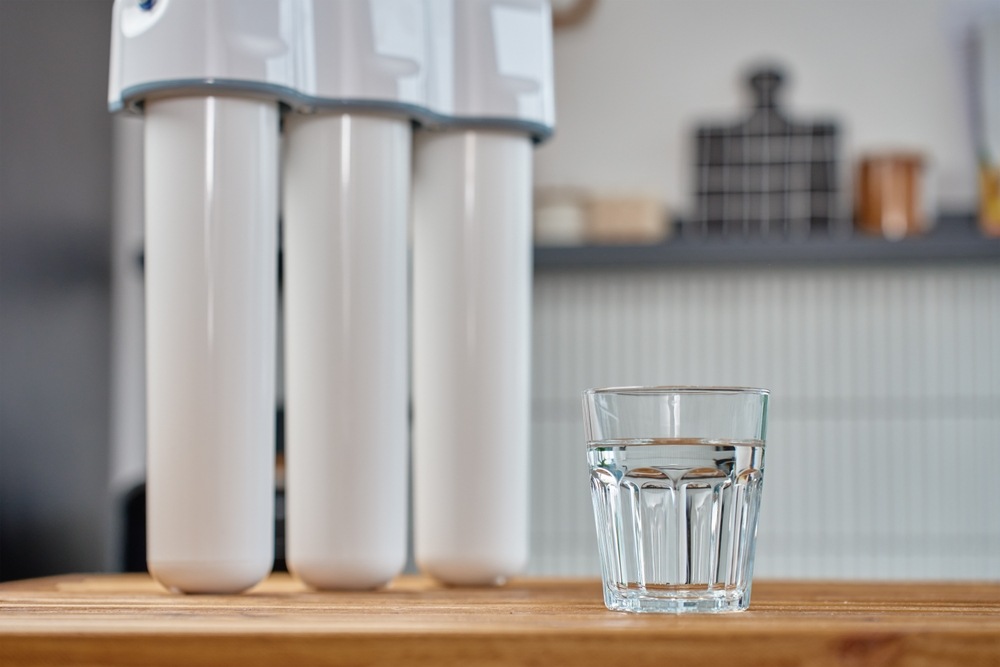
Reverse osmosis can be useful for specific water-treatment goals, particularly at a point of use, but the test should establish why it is being considered and whether the system is appropriate for the actual water chemistry.
The same principle applies to filtration, softening, and purification equipment.
Look at the Difference Between Aesthetic and Health Concerns
Water problems are often divided into three practical categories: aesthetic, plumbing-related, and health-related.
Aesthetic issues include taste, odor, staining, and appearance.
Plumbing-related concerns can include scale, corrosion, sediment, and effects on fixtures or water-heating equipment.
Health-related concerns involve contaminants that may pose a risk at certain concentrations or under specific conditions.
These categories can overlap, but they should not be treated as interchangeable.
For example, hard water can create scale without representing a contamination problem. A bacterial result is different. So is elevated nitrate.
When we review water quality, we want to know what the result actually means for the household before recommending equipment.
Sediment and Turbidity Tell a Different Story
Turbidity refers to how cloudy or hazy water is because of suspended particles.
Sediment can come from several sources, including conditions affecting a private water supply or plumbing system. Cloudy water can sometimes appear after changes in flow or disturbances within the system.
Athol’s seasonal weather can make homeowners more aware of changes in their water, particularly after periods of heavy rain, snowmelt, or changing groundwater conditions. That does not mean precipitation automatically contaminates a home’s water. It means a sudden change deserves investigation rather than an automatic equipment purchase.
If sediment is present, the particle size, concentration, source, and frequency matter when selecting treatment.
What a Whole-House Filter Actually Needs to Solve
A whole-house water filter treats water entering multiple fixtures throughout the home.
That can make sense when the test identifies a problem that affects the household’s general water supply. It is not necessarily the right approach when the concern is limited to drinking or cooking water.
For example, if the goal is improving water used throughout the home, point-of-entry treatment may be appropriate. If the concern involves only a specific contaminant at the kitchen tap, a point-of-use approach may be more practical.
The test results help define the scope.
We also consider flow requirements, household demand, plumbing configuration, maintenance requirements, and the type of treatment needed.
When Reverse Osmosis Makes Sense
Reverse osmosis is a specialized treatment process. It uses a semipermeable membrane to reduce many dissolved substances from water.
That can make it useful for particular water-quality concerns. It is not a blanket answer for hard water, sediment, bacteria, or every unusual taste.
The test should tell us what needs to be reduced before we decide whether reverse osmosis belongs in the treatment plan.
A homeowner also needs to understand where the system will be installed and what water it is intended to treat. A point-of-use system at a kitchen faucet has a different purpose from whole-house treatment.
Filtration and Purification Are Not Synonyms
People often use the terms interchangeably, but treatment systems can work in very different ways.
Filtration generally removes specific particles or substances through a physical or chemical process. Purification is a broader term that can refer to treatment intended to address contaminants affecting water safety or quality.
The correct equipment depends on the contaminant.
A system designed for sediment should not be presented as though it handles every dissolved contaminant. Likewise, equipment designed for a specific contaminant should not automatically be treated as a universal solution.
When homeowners compare water purification systems, we recommend starting with the laboratory results and the intended use of the water.
What About Water That Tastes Fine?
Good taste does not prove that water is free of every contaminant.
Taste and odor are useful observations, but they cannot replace appropriate testing. Some substances can be present without producing an obvious change in taste, smell, or appearance.
The opposite is also true. Water can taste unusual because of minerals or other aesthetic factors without presenting the same type of concern as a confirmed health-related contaminant.
Testing provides information that your senses cannot.
Read the Units Before Reacting to the Number
A test result is incomplete without its unit of measurement and reference range.
Milligrams per liter, parts per million, colony-forming units, pH units, and other measurements are not interchangeable. A number that looks large or small on its own may have little meaning without the unit and laboratory reference.
We also want to know when the sample was collected and whether the test was performed by a qualified laboratory or through a basic home testing method.
Home test kits can be useful for screening. More significant decisions may require laboratory analysis.
Match the Treatment to the Problem
The goal is not to install the most equipment.
The goal is to address the specific water issue identified by the testing.
Depending on the results, that could mean addressing hardness, sediment, iron, pH, a specific dissolved contaminant, or another documented issue. In some cases, the appropriate conclusion may be that additional testing is needed before treatment is selected.
Our role is to connect the test results to the actual plumbing and water-use conditions in the home.
We are a family-operated full-service plumbing company serving residential, commercial, and industrial customers. Our licensed, bonded, and insured plumbers bring more than 30 years of combined plumbing experience to the work. We also provide free estimates, a full workmanship guarantee, and 24/7 emergency plumbing service.
Frequently Asked Questions
What should I look for first on a home water test?
Start with the contaminant or characteristic measured, the result, the unit, and the laboratory’s reference range. Then determine whether the finding affects health, plumbing, taste, odor, or another household concern.
Does hard water mean my water is unsafe?
Not necessarily. Hardness primarily refers to dissolved calcium and magnesium and is commonly associated with scale rather than contamination.
Do I need a filter if my water has a high TDS reading?
Not automatically. Total dissolved solids represent dissolved material in water, so the individual substances and their concentrations need to be understood before selecting treatment.
Read the Test Before You Buy the Equipment
A water test is useful because it replaces assumptions with information. The next step is interpreting that information correctly.
If you need help understanding your results or deciding what treatment approach fits your home, schedule a service from Straight Shooter Plumbing & Rooter. Let us review the plumbing and water-quality concerns with you, provide a free estimate where appropriate, and help you determine what needs to be addressed before you invest in filtration, purification, softening, or other treatment equipment.
Contact Straight Shooter Plumbing and Rooter Now!
Straight Shooter Plumbing and Rooter is your leading plumber in Idaho, Texas, and Tennessee. Call us or fill out the form to schedule an appointment.