



Water Leak Without Damage? Here’s How Straight Shooter Finds The Source
Home /

When it comes to water leaks, finding the source is often harder than finding the damage. The first clue may be a water meter that keeps moving, an unexplained increase in water use, a damp smell, a drop in pressure, or a section of flooring that feels different.
Straight Shooter Plumbing & Rooter approaches leak detection services in Hayden, ID, as a diagnostic job first. We start with the plumbing system, narrow down where water is moving, and use the evidence to determine where the leak is actually coming from.
Here is how we work through a concealed leak.
Start With the Water, Not the Damage
Visible damage can be misleading.
Water travels. A leak inside a wall can run along framing before appearing several feet away. Water under a floor can migrate toward a low point. A supply-line leak can leave moisture in an area that does not line up with the failed connection.
So we do not automatically open the wall or pull up flooring because one area looks suspicious.
First, we look at how the plumbing system is behaving.
Is the water meter moving when no fixtures are running? Has the homeowner noticed a pressure change? Does the leak happen constantly, or only when someone uses a sink, toilet, shower, washing machine, or other fixture?
Those details help separate a continuous supply-line leak from a fixture drain problem or a leak that only occurs when a particular section of plumbing is under flow.
That first distinction can save unnecessary demolition.
Confirm That There Is an Active Leak
Not every damp spot means a plumbing pipe is leaking.
Condensation, exterior moisture, appliance discharge, roof runoff, and groundwater can all create moisture that looks like a plumbing problem.
Hayden’s climate adds another variable. During cold weather, temperature differences around exterior walls, crawlspaces, garages, and utility areas can produce condensation. Spring snowmelt and saturated ground can also introduce moisture around foundations.
We need to establish whether the water is coming from the plumbing system before recommending a repair.
One useful starting point is the home’s water meter. With all fixtures turned off, an unexplained change in the meter reading can indicate that water is moving somewhere in the system. It does not tell us exactly where the leak is, but it gives us a reason to investigate the plumbing rather than guessing.
Narrow Down the Plumbing Section
Once we have evidence of a leak, we work backward through the plumbing layout.
A house may have multiple branches supplying bathrooms, kitchens, laundry areas, exterior fixtures, and other plumbing points. A leak on one branch can affect pressure or water usage throughout the property.
We isolate sections when the plumbing configuration allows it.
For example, if shutting off a fixture or isolating a branch stops the water loss, we have narrowed the search considerably. If the meter continues moving, the problem may be farther upstream.
This is where experience becomes useful. Plumbing diagrams are helpful, but existing homes do not always match the plans. Remodels, additions, previous repairs, and older piping can change the way water lines are routed.
We account for what is actually in the building.
Listen for the Clues You Cannot See
A concealed leak can leave physical clues before it creates obvious water damage.
You may hear faint water movement when every fixture is off. A toilet may cycle unexpectedly. A wall or cabinet may develop a persistent damp odor. Flooring may swell or change texture. Paint can discolor or begin separating from drywall.
None of these clues proves the location of the leak by itself.
We use them as evidence.
A leak beneath a bathroom floor may produce a different pattern from a leaking supply line behind a kitchen cabinet. A buried line may show up through unexplained water loss without producing any obvious indoor damage at all.
The goal is to connect the symptom to the plumbing section responsible for it.
Check Fixtures and Connections Before Assuming the Pipe Failed
A hidden leak does not always mean a pipe has cracked.
Supply-line connections, shutoff valves, fixture connections, toilets, water heaters, and other plumbing components can leak. Some leaks are small enough to evaporate or disappear into surrounding materials before anyone notices standing water.
That is why we inspect accessible plumbing points before assuming the problem requires opening a wall or floor.
This is particularly important in kitchens and bathrooms. Cabinets can conceal supply connections. Finished walls can hide piping. A slow leak around a fixture can continue for months before the homeowner sees obvious damage.
A careful inspection can identify a failed connection without turning a small repair into a major project.
When the Leak Is Under a Slab
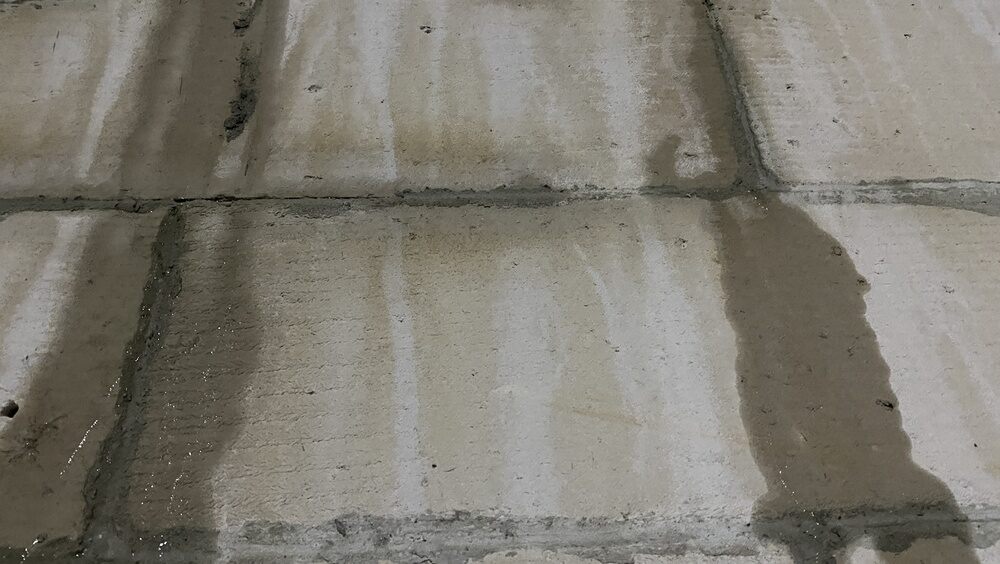
Slab leaks require a different level of attention because the plumbing may run beneath concrete.
A homeowner may notice unexplained water use, warm or damp flooring, changes in water pressure, or water collecting near the foundation. Sometimes there is no obvious indoor symptom at all.
We first establish whether the evidence points toward a buried plumbing line. From there, the investigation becomes more targeted.
Slab leak detection is about locating the affected section accurately enough to determine what kind of access and repair may be appropriate. The answer may involve localized access rather than removing large areas of flooring or concrete.
If the pipe itself has failed, the repair strategy depends on the location, pipe condition, accessibility, and the surrounding structure. Slab leak repair should be based on those conditions rather than a one-size-fits-all approach.
Buried Water Lines Can Be Even Harder to Trace
A leak outside the house can waste a surprising amount of water without producing an obvious puddle.
Ground conditions can absorb water quickly. During warmer periods, vegetation can also make moisture harder to distinguish from normal landscape conditions. During Idaho’s colder months, frozen ground can change how water moves through soil.
We look for evidence such as unexplained water usage, changes in pressure, unusually wet areas, and conditions around the suspected route of the water line.
The objective is to narrow down the affected section before excavation becomes necessary.
Digging without first locating the problem can turn a plumbing investigation into unnecessary landscape disruption.
We Do Not Treat Every Leak the Same Way
The correct repair depends on what failed.
A loose connection may need a localized repair. A damaged section of pipe may be repairable without replacing an entire system. Extensive deterioration can call for a larger replacement.
Our plumbing leak detection work is therefore tied to the repair decision. We want to know what is leaking, where it is leaking, why it failed when the evidence allows us to determine that, and what access the repair will require.
The same approach applies to plumbing repairs in commercial and industrial buildings. Larger systems have more branches, longer runs, and more potential failure points, so isolating the affected section becomes even more important.
What About Gas Leaks?
Gas leaks require a different response from water leaks.
A suspected gas leak should never be treated as an ordinary plumbing diagnostic. If you smell gas or suspect an immediate gas emergency, leave the area and contact the appropriate emergency utility service according to local safety guidance.
Our gas leak detection work is focused on locating plumbing-related gas-line problems so the appropriate repair can be determined safely.
Water and gas systems have very different hazards, so the diagnostic process and safety precautions are not interchangeable.
Why Waiting Can Make a Hidden Leak More Expensive
A small leak may seem harmless when there is no visible damage.
Water can still affect drywall, flooring, insulation, cabinets, framing, and other building materials. Prolonged moisture can also create conditions that encourage mold growth.
There is another concern: the leak may continue even when the visible symptom disappears.
A damp spot can dry. A musty smell can fade. A small puddle can evaporate. None of those changes proves that the plumbing problem stopped.
If the water meter shows unexplained usage or you hear water moving when the house is quiet, the plumbing deserves attention.
What We Look For During a Leak Investigation
As a family-operated full-service plumbing company, we investigate leaks in homes, businesses, and industrial facilities. Our licensed, bonded, and insured plumbers use the information available from the property and plumbing system to narrow the problem before recommending work.
We look at:
- Water-meter activity when fixtures are off
- Changes in water pressure
- Fixture and shutoff connections
- Toilets, sinks, showers, and other plumbing fixtures
- Accessible supply lines
- Signs of moisture around walls, floors, cabinets, and utility areas
- Plumbing layout and previous repairs
- Whether the leak appears continuous or use-related
- Whether the evidence points toward a buried or concealed line
We have more than 30 years of combined plumbing experience behind that process.
We also provide free estimates, a full workmanship guarantee, and 24/7 emergency service. If a concealed leak is actively damaging the property, waiting for normal business hours may not be practical.
Frequently Asked Questions
Is a slab leak always an emergency?
Not every slab leak produces immediate structural damage, but an active leak beneath a concrete slab should be evaluated promptly. Continued water loss can damage surrounding materials and make the eventual repair more involved.
Can a water meter detect a plumbing leak?
A water meter can show that water is being consumed when fixtures are not intentionally using it. It does not normally identify the exact leak location, so further investigation is needed.
Do cold Idaho winters make hidden leaks more likely?
Freezing temperatures can place additional stress on water lines, particularly in vulnerable areas such as exterior walls, crawlspaces, and unheated spaces. Homes should be checked promptly when unexplained water loss or other leak symptoms appear after freezing conditions.
Find the Source Before the Damage Spreads
The hardest leak to repair is often the one nobody can see.
If your water usage does not make sense, your pressure has changed, or you suspect water is escaping somewhere behind the walls, contact Straight Shooter Plumbing & Rooter for leak detection services in Hayden, ID.
Our services are available for residential, commercial, and industrial properties. We are a family-operated plumbing company with 24/7 emergency service, more than 30 years of combined plumbing experience, and a full workmanship guarantee.
Contact Straight Shooter Plumbing and Rooter Now!
Straight Shooter Plumbing and Rooter is your leading plumber in Idaho, Texas, and Tennessee. Call us or fill out the form to schedule an appointment.